Equus caballus
For the horse,with your own vet.
An Arabian's line can be traced for centuries. A banked cell line keeps that line open for testing, therapy and – where rules allow – continuity. See also Heritage.
Equus caballus
- Sites
- Abu Dhabi · Bahrain · California
- Cell banking
- $5,000
- Cryostorage
- $500 a year
- Continuity
- By consultation
i.
Why owners preserve
Horse owners in the Gulf tend to think in bloodlines. An Arabian mare may descend from lines recorded for generations; an endurance or show-jumping horse may carry the results of decades of careful breeding. When such an animal ages, is injured, or is gelded before its value to breeding is known, its genome is at risk of being lost. Preservation keeps it.
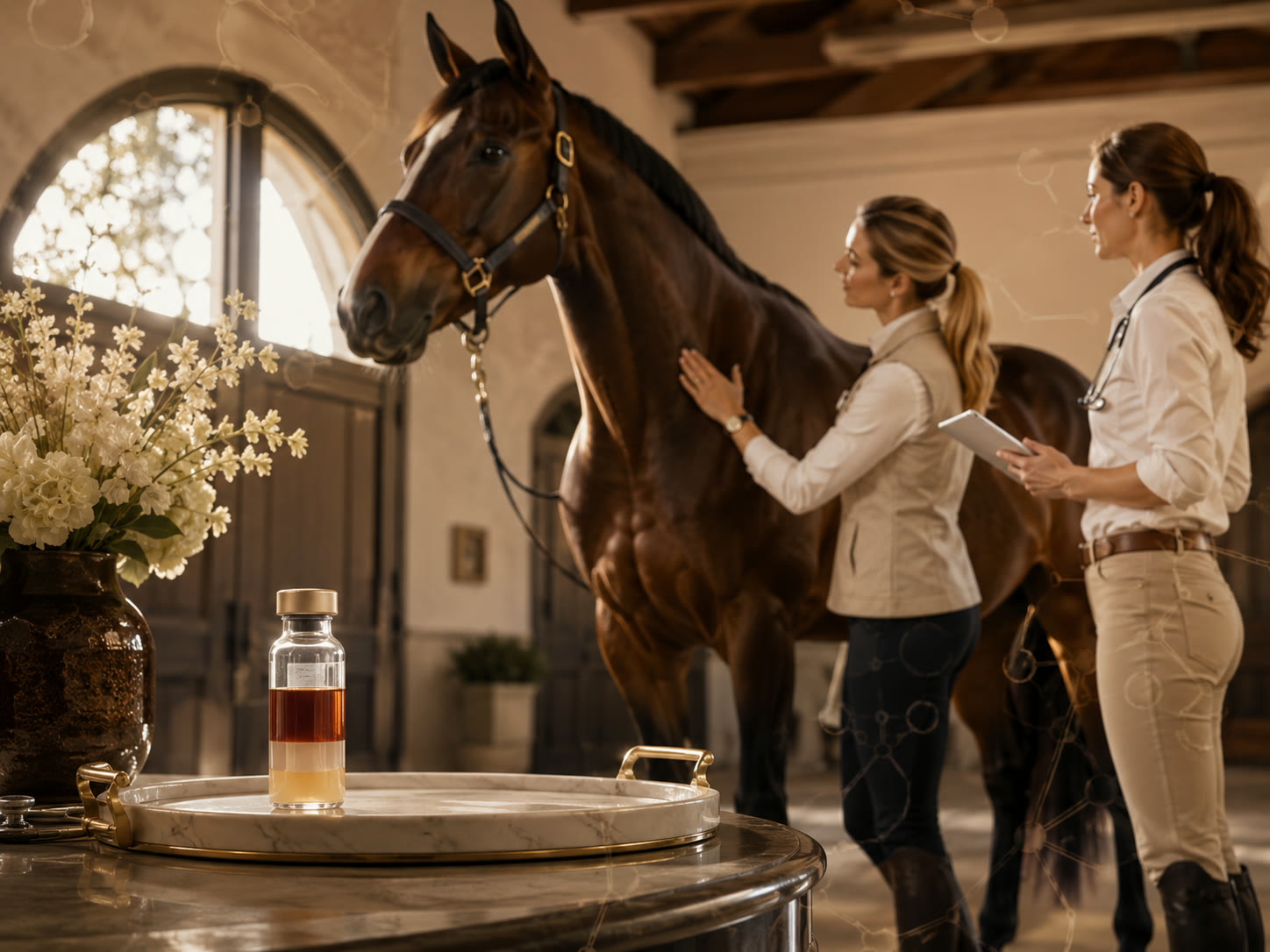
A small skin biopsy, taken at the stable by your own veterinarian or ours, becomes a living cell line within about three weeks, frozen at −196 °C in two cities. We coordinate every step with your veterinary team. The line can later support genetic testing, the preparation of regenerative therapies – where horses have the strongest body of veterinary experience – and, where studbook and local rules allow, cloning.
ii.
What is possible, and what is not
The first cloned horse, Prometea, was born in Italy in 2003. Since then, horses have been cloned for sport – particularly polo and show jumping – and to preserve the breeding value of geldings. A cloned horse is a genetic twin of its donor. It must be trained from the beginning, and its temperament will be its own.¹
A cloned horse is…
- A genetic twin, able to breed normally.
- A way to recover a gelding's breeding value.
- Born about 11 months after embryo transfer.
A cloned horse is not…
- Accepted by every studbook – many do not register clones.
- Trained, or proven, at birth.
- A guarantee of performance.
Regenerative therapy is often the most immediate use of a banked line. Stem cells prepared from the horse's own banked cells, prescribed and administered by its veterinarian, are used for tendon, ligament and joint injuries. Outcomes vary, and availability depends on local veterinary regulation.
iii.
Timelines
Day 0
Stable biopsy
With your veterinary team.
Day 21
Line banked
Mirrored in two cities.
Months 1–6
Nuclear transfer
Only if you choose.
Months 15–24
Birth
Gestation about 11 months.
A cloning programme for a horse typically takes fifteen to twenty-four months from an established line to birth. Regenerative preparations from a banked line can be ready in about two weeks.
iv.
Notes on studbooks and sport
Studbook and competition rules differ widely. Some breed registries, including many for Arabians and Thoroughbreds, do not register cloned horses; some sports federations permit clones to compete. We ask you to check the rules that matter to you before beginning, and we will help you find them.
v.
Prices
- Cell banking, UAE
- $5,000
- Cell banking, GCC
- $6,500
- Cryostorage
- $500 a year, from the second year
- Stem cells and PRP
- By consultation
- Cloning
- By consultation
vi.
Questions
- Can my own vet take the biopsy?
- Yes. We send a sealed kit and instructions, or our veterinarian attends with your team.
- Can a gelding be cloned?
- Yes. A genetic twin of a gelding is an intact male able to breed, which is why some owners bank geldings.
- Will my studbook register a clone?
- Many do not. Check with your breed society before beginning; we will help you ask.
- Can banked cells help an injured horse?
- Your veterinarian may prescribe stem cells prepared from the banked line. Outcomes vary.
- How much does it cost?
- Banking is $5,000 in the UAE. Regenerative therapy and cloning are by consultation.
- How long does horse cloning take?
- Typically 15 to 24 months from an established line.
Arrange a stable visit.
Book a visit